The Frugal Manifesto for People Who Like Having Money
Why Saving Money Feels Hard (And How to Make It Easy)

Saving money tips are everywhere — but most people still struggle to actually save. Here are the most effective strategies to get started right now:
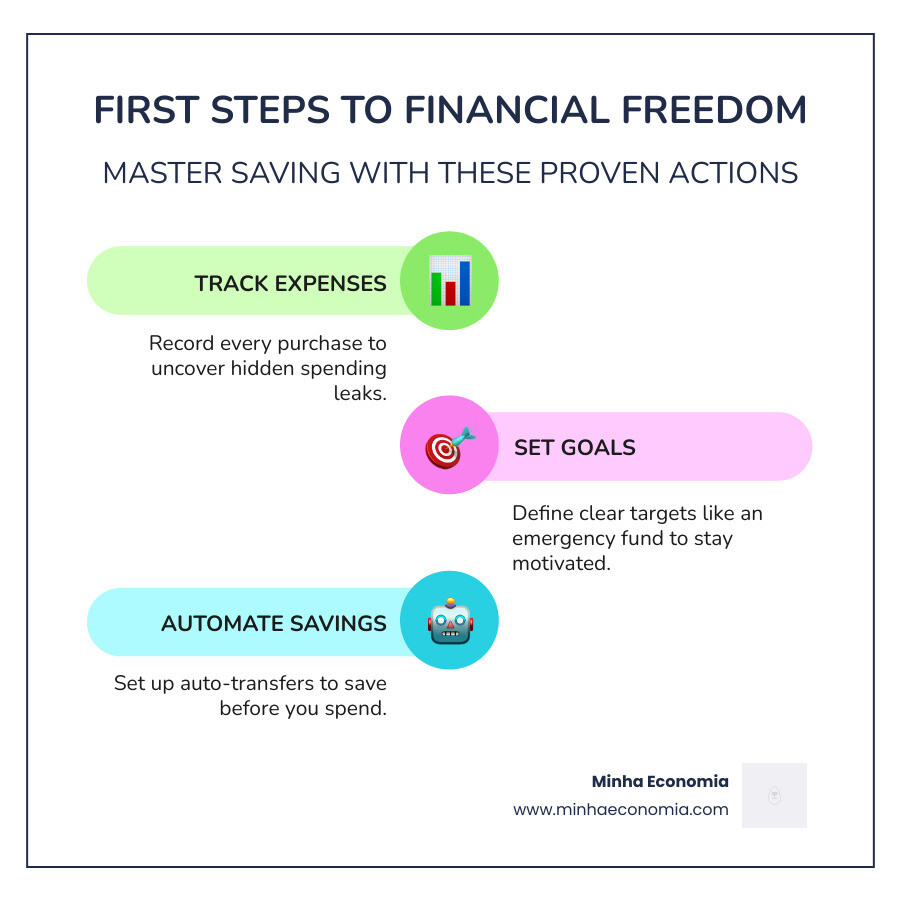
- Track every expense — write down what you spend, even small purchases
- Follow the 50-30-20 rule — 50% on needs, 30% on wants, 20% on savings
- Automate your savings — set up automatic transfers so you save before you spend
- Cut one subscription today — review recurring charges and cancel what you don’t use
- Build an emergency fund first — aim for 3 to 9 months of living expenses
- Set a specific goal — saving for something real keeps you motivated
- Wait before buying — delay non-essential purchases by 24 to 48 hours
In April 2026, with costs rising and financial uncertainty still very real, saving money isn’t just smart — it’s essential.
But here’s the thing most people miss: saving doesn’t require a dramatic life overhaul. It usually comes down to small, repeatable decisions made every day — at the grocery store, on your phone, in your monthly subscriptions.
The hardest part? Getting started.
Once you have a simple system, it gets easier fast. This guide gives you that system — practical, no-fluff strategies that work even on a tight budget.
Master the Art of Starting: Tracking and Budgeting
We often hear that the hardest thing about saving is the act of putting money away. In reality, the hardest part is the “getting started” phase. Most of us don’t actually know where our money goes. We see a balance at the end of the month and wonder how it got so low.
To fix this, we must become detectives of our own wallets. Start by recording every single expense. This includes the $5 latte, the $2 parking meter fee, and the $150 utility bill. Use a spreadsheet, a dedicated app, or even a pocket notebook. The goal is to categorize your spending—gas, groceries, mortgage, entertainment—and then cross-reference these with your bank and credit card statements to ensure nothing slipped through the cracks.
One of the most effective frameworks we recommend is the 50-30-20 rule. It simplifies your life by breaking your income into three buckets:
- 50% for Needs: Housing, groceries, utilities, and insurance.
- 30% for Wants: Dining out, hobbies, and streaming services.
- 20% for Savings: Debt repayment, emergency funds, and retirement.
By treating that 20% savings category as a “non-negotiable expense”—just like your rent—you ensure that you pay yourself first before the world takes its cut. This shift is backed by the Scientific research on the psychology of habit formation, which suggests that repeating a simple action in a consistent context leads to automaticity.
| Feature | 50-30-20 Budgeting | Zero-Based Budgeting |
|---|---|---|
| Main Goal | Balanced lifestyle and automated savings | Giving every single dollar a specific “job” |
| Complexity | Low – great for beginners | High – requires detailed planning |
| Flexibility | High – allows for lifestyle fluctuations | Low – every cent is accounted for |
| Best For | Building long-term habits | Maximizing every penny on a tight budget |
Essential saving money tips for a realistic budget
Creating a budget that actually works requires honesty. We need to look at our fixed expenses (the ones that don’t change, like rent) and our variable costs (the ones we control, like groceries).
A common mistake is forgetting about irregular expenses. Think about car maintenance, annual insurance premiums, or holiday gifts. If you don’t plan for these, they will feel like “emergencies” that ruin your budget. Instead, estimate the annual cost, divide it by 12, and set that amount aside each month.
Aim for a 20% savings goal, but if that feels impossible today, start at 5% and increase it by 1% every few months. The most important part is the monthly review. Checking your progress once a month allows you to identify problems quickly and adjust before a small leak becomes a flood.
How to fit savings into your lifestyle
Fitting savings into your life isn’t about deprivation; it’s about alignment. Start with an income-to-expense ratio analysis. If your needs are taking up 70% of your income, it’s time for a deep spending analysis.
We often find that “lifestyle creep”—the tendency to spend more as we earn more—is the biggest enemy of wealth. To combat this, use tools like budgeting apps that link to your accounts or simple spreadsheet templates. If you’re a student or just starting out, many institutions offer financial coaching or student money management resources. Use them! Knowing your finances is the first step toward owning them.
The Psychology of Spending: Needs vs. Wants
Our brains are hardwired for immediate gratification. We see a shiny new gadget and our “want” center screams louder than our “need” center. To save money effectively, we have to learn to distinguish between the two.

A “need” is something essential for health and your ability to work. A “want” is something that improves your quality of life but isn’t vital. There are, however, many gray areas. A car might be a need for your commute, but a luxury SUV is a want. A basic smartphone is a need in 2026, but the latest foldable model with 10 cameras is a want.
To navigate this, we use the 48-hour rule. If you see something you want to buy, wait 48 hours. Often, the chemical hit of “newness” wears off, and you’ll realize you don’t actually need it. Keep a “not now” list for these items. If you still want it after a month and it fits in your budget, then you can consider it.
Smart saving money tips to curb impulse buys
Impulse buys are the silent killers of financial freedom. Online shopping has made it too easy to spend money with a single click. Here is how we add “friction” back into the process:
- Unsubscribe from retail emails: If you don’t see the “50% OFF” flash sale, you won’t feel the urge to spend.
- Cart abandonment: Put items in your cart and then close the tab. Not only does this give you time to think, but some retailers will even email you a coupon code to encourage you to finish the purchase.
- Subscription audit: We often pay for apps and services we no longer use. Review your bank statement and cancel anything you haven’t used in the last 30 days.
Distinguishing between essential and non-essential
When times are tough, we have to be ruthless with our definitions.
- Transport: Can you carpool, bike, or use public transport? If you must have a car, choose a cost-effective, reliable model over a luxury brand.
- Entertainment: Consolidate your streaming services. Do you really need four different providers at once? Pick one, watch what you want, cancel it, and move to the next.
- Food: This is usually the largest variable expense. The difference between dining out and home cooking is massive. While an occasional treat is fine, making your own meals is the foundation of a frugal lifestyle.
Proven saving money tips for Every Category
Let’s talk about the “latte factor.” You’ve probably heard that skipping your daily coffee can make you a millionaire. While that’s an exaggeration, the numbers are still impressive.

Did you know that brewing coffee at home instead of buying it daily can save you approximately $1,168 per year? That is enough for a round-trip flight for a vacation or a significant boost to your emergency fund.
Cutting costs on a tight budget
When your budget is tight, you need to optimize every dollar.
- Grocery Strategies: Never shop without a grocery list, and never shop while hungry. Meal planning around what you already have in your pantry (“shopping your kitchen”) prevents food waste, which is essentially throwing money in the trash.
- Store Brands vs. Name Brands: In most cases, the ingredients are identical. Switching to store brands for staples like flour, salt, and cleaning supplies can save 20-30% on your bill.
- Energy Conservation: Small habits add up. Switch to LED lighting, use programmable thermostats to lower the heat when you’re sleeping, and wash your laundry in cold water. Cold water gets clothes just as clean but uses significantly less energy.
Leveraging technology and challenges
Saving money can be a game if you use the right tools.
- Cashback Apps and Rebates: Many manufacturers offer rebates that people simply forget to claim. Use apps that allow you to upload receipts for cashback on items you were already going to buy.
- Savings Challenges: The 52-week challenge is a classic. You save $1 in week one, $2 in week two, and so on. By the end of the year, you’ve saved $1,378. If that feels too long, try a 26-week version or even “no-spend” weekends.
- Spare Change Programs: Many banks offer tools that “round up” your purchases to the nearest dollar and move the difference into a savings account. It’s a painless way to save without even noticing.
Building Your Fortress: Goals and Automation
Saving without a goal is like running a race without a finish line. To stay motivated, we need to categorize our objectives.
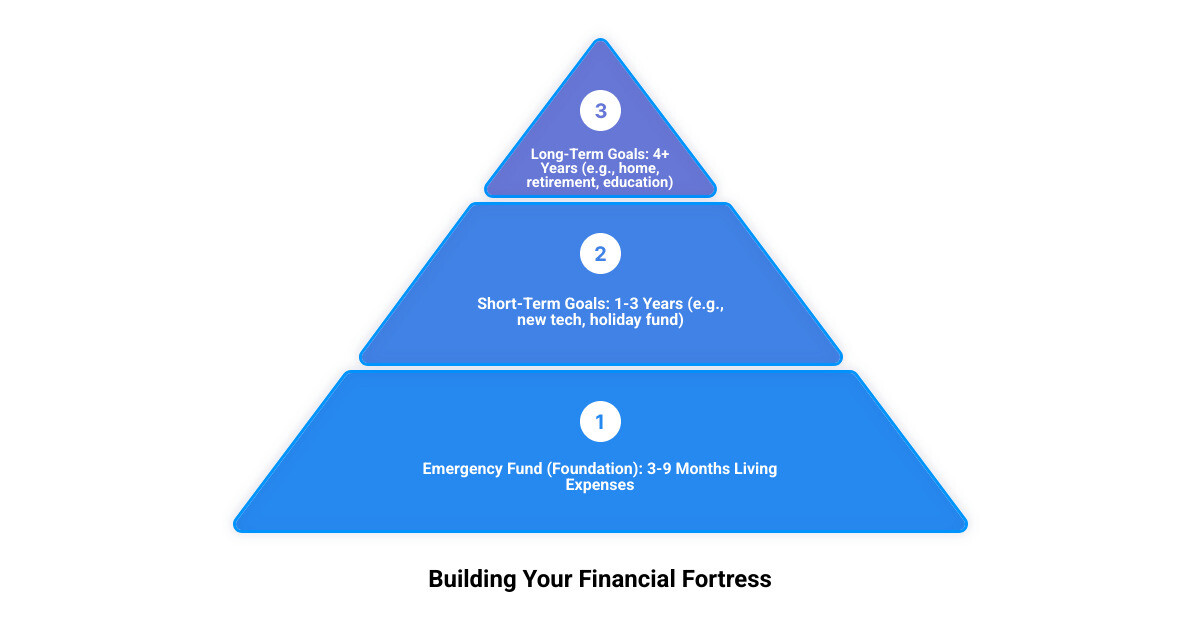
- The Emergency Fund (The Foundation): Before you save for a vacation, you must save for life’s “uh-oh” moments. Aim for three to nine months of living expenses. This money should stay in a liquid, FDIC-insured account.
- Short-Term Goals (1-3 Years): This includes things like a new smartphone, a car down payment, or a holiday fund.
- Long-Term Goals (4+ Years): This is for the big stuff—a home down payment, your child’s education, or retirement.
Prioritizing your financial objectives
How do we decide where the money goes first? We recommend a “waterfall” approach:
- Step 1: Build a small “starter” emergency fund (at least one month of expenses).
- Step 2: Pay off high-interest debt (like credit cards).
- Step 3: Maximize employer 401(k) matching. This is literally free money; if you don’t take it, you’re giving yourself a pay cut.
- Step 4: Finish the full emergency fund.
- Step 5: Invest for long-term goals using IRAs or 529 plans.
Using “if/then planning” is a great psychological trick. If I get a tax refund, then 50% goes to my house fund and 50% to debt. This removes the decision-making fatigue when extra money arrives.
Maximizing employer and bank benefits
Your workplace is often a goldmine for saving money tips and tools.
- Pre-tax accounts: Use Health Savings Accounts (HSAs) or Flexible Spending Accounts (FSAs) for medical and childcare costs. Since this money is taken out before taxes, you’re essentially getting a discount on those services.
- Direct Deposit Split: Ask your payroll department to send a portion of your check directly to a savings account. If you never see the money in your checking account, you won’t miss it.
- Avoid Bank Fees: No one likes giving away money for free. Avoid maintenance fees by maintaining minimum balances or setting up direct deposits. Use your own bank’s ATMs to avoid those pesky $3 fees. For more detailed strategies on navigating these options, you can find more info about financial planning on our main site.
Frequently Asked Questions about Saving Money
How do I save money fast?
The fastest way to see a difference is to attack your “Big Three” variable expenses: groceries, subscriptions, and convenience spending.
- Cancel all but one streaming service.
- Stop ordering delivery. The fees and tips often double the price of the food.
- Use a grocery list.
- Negotiate your bills. Call your internet or insurance provider and ask for a better rate. You’d be surprised how often they say yes just to keep you as a customer.
Should I save or pay off debt first?
This is a classic debate. We believe in a balanced approach. You should always have a small emergency cushion (at least $1,000 to $2,000) before aggressively attacking debt. Once that cushion is there, focus on high-interest debt using the “Debt Avalanche” method (paying the highest interest rate first) to save the most money over time.
How much should my emergency fund be?
The standard advice is three to nine months of living expenses. If you have a stable job and low expenses, three months might be enough. If you are self-employed or have a family, aim for nine. Keep this money in a High-Yield Savings Account (HYSA) so it earns a bit of interest while staying safe and accessible.
Conclusion
At Minha Economia, we believe that financial freedom isn’t reserved for the wealthy. It is built through small, repeatable changes that lead to sustainable habits. Whether it’s brewing your coffee at home, waiting 48 hours before a purchase, or finally setting up that automated transfer, every dollar you save is a brick in the fortress of your financial security.
Saving money doesn’t have to be a punishment. It’s an act of self-care for your future self. By using these saving money tips, you are taking control of your life and ensuring that your money works for you, rather than the other way around.
Ready to take the next step? Start your journey today and explore our tools designed for your economic empowerment.
