
The Ultimate Guide to Sewing a Patch on Jeans by Hand
Why Sewing Patches on Denim Is One of the Smartest Skills You Can Learn
Sewing patches on denim is a simple, low-cost skill that can save your favorite jeans or jacket from the trash — and save you real money in the process.
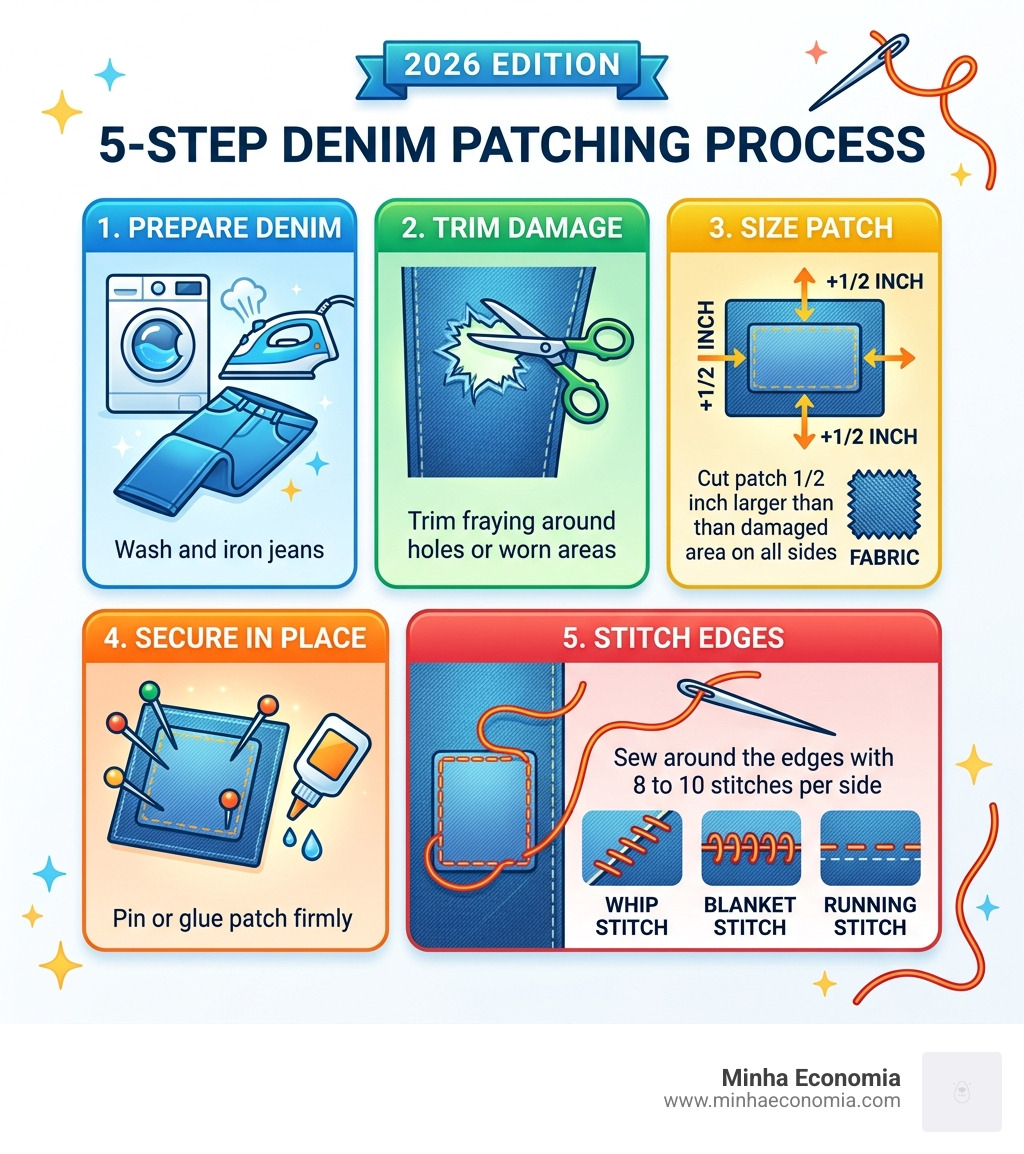
Here’s a quick overview of how to do it:
- Wash and iron your denim before starting
- Trim any frayed edges around holes or worn areas
- Cut your patch at least 1/2 inch larger than the damaged area on all sides
- Pin or glue the patch firmly in place before stitching
- Sew around the edges using a whip stitch, blanket stitch, or running stitch — about 8 to 10 stitches per side
That’s the core process. The sections below go deeper into each step.
With the cost of clothing rising in 2026, throwing out a pair of jeans with a blown-out knee no longer makes financial sense. A well-sewn patch costs almost nothing — just a few basic supplies you likely already own — and a properly stitched repair can last 50+ washes.
Compare that to iron-on patches, which typically fall apart after just 10 to 20 washes. Sewing wins, every time.
This guide focuses on hand-sewing techniques because they require no special equipment, give you precise control, and work on any denim garment — jeans, jackets, or anything in between.
Essential Supplies for Sewing Patches on Denim
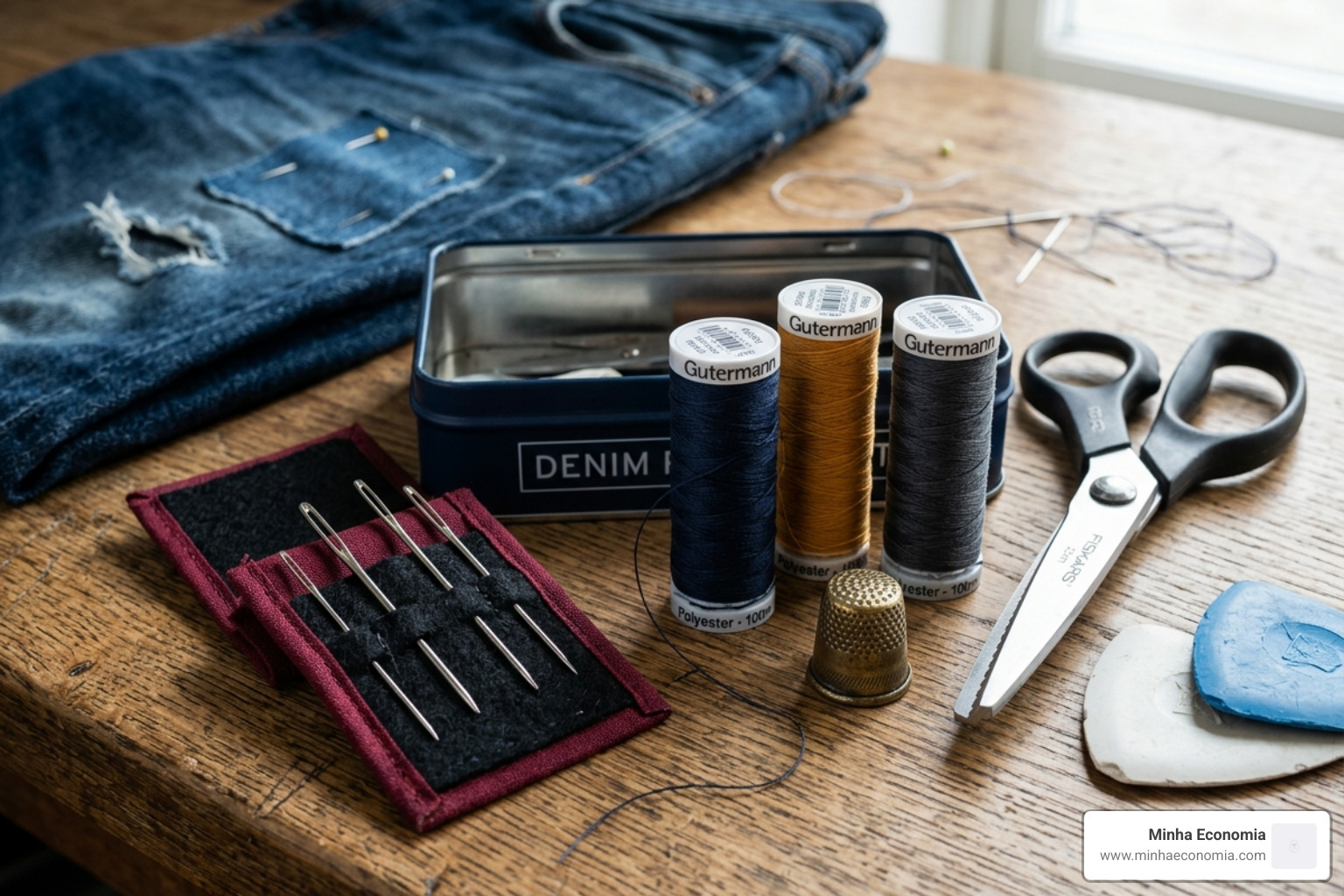
Before we dive into the stitches, we need to gather our toolkit. Since denim is a heavy, tightly woven fabric, using the wrong tools will lead to broken needles and sore fingers. We want this process to be as smooth as possible!
- Heavy-Duty Sewing Needles: This is non-negotiable. For standard denim, a 90/14 needle is usually sufficient. However, if you are sewing through multiple layers of heavy denim or attaching a thick embroidered patch, we recommend a 100/16 or 110/18 needle. These are thicker and won’t snap under pressure.
- Heavy-Duty Polyester Thread: While cotton thread is great for some projects, it can snap over time when used on high-friction garments like jeans. A strong polyester or “jeans thread” (like Gütermann) is designed to withstand the tension of daily wear.
- Thimble: If you’ve ever tried to push a needle through three layers of denim by hand, you know it’s hard work. A thimble protects your fingertip and provides the leverage needed to drive the needle through the fabric.
- Pinking Shears: These are scissors with a zig-zag blade. Using them to cut your patch helps prevent the edges of the patch itself from fraying.
- Fabric Glue Stick: This is a pro-mender’s secret. Instead of relying solely on pins, a quick swipe of a water-soluble fabric glue stick will hold your patch perfectly in place while you sew.
- Tailor’s Chalk or Marking Tool: We use this to outline exactly where the patch will go so it doesn’t end up crooked.
- Sharp Fabric Scissors: For trimming away those pesky frayed “fuzz balls” around the hole.
For more details on the basics, you can check out this guide on How to Sew a Patch on Jeans – Do It Yourself.
Choosing the Right Materials for Sewing Patches on Denim
Not all patches are created equal. When we choose a patch, we need to consider the “weight” of the fabric. If your jeans are heavy, 12-oz denim and you use a thin cotton scrap as a patch, the heavy denim will eventually tear the patch apart.
Grain Lines Matter When cutting your own patch from scrap fabric, try to align the “grain” (the direction of the threads) with the grain of your jeans. This ensures the patch stretches and moves the same way your jeans do, preventing weird puckering.
Colorfastness and Pre-washing Always pre-wash your patch material. If you sew a brand-new dark blue patch onto light-wash jeans without washing it first, the dye might bleed into your jeans the next time they hit the laundry.
| Feature | Iron-on Patches | Sew-on Patches |
|---|---|---|
| Durability | 10–20 washes | 50+ washes |
| Time to Apply | 2 minutes | 20 minutes |
| Equipment | Iron | Needle & Thread |
| Best For | Temporary style/Low wear | Permanent repairs/High wear |
| Cost | $2–$5 per patch | Pennies (DIY) |
Preparing Your Denim for a Professional Finish
The secret to a patch that doesn’t look like a “hack job” is the preparation. We don’t just slap a patch on and start sewing.
- Clean and Dry: Make sure the garment is freshly laundered. Dirt and oils can make the fabric slippery and harder to work with.
- Trim the Frayed Edges: Use your sharp scissors to cut away the white “strings” and frayed bits around the hole. Cut parallel to the weave of the denim. Trimming these back ensures the patch sits flat and prevents the hole from growing underneath the patch.
- Iron Everything: Iron the area around the hole and iron the patch itself. Any wrinkles present now will be “locked in” once you start sewing, which can lead to uncomfortable bunching.
- Marking Placement: Lay your jeans flat on a table. Place the patch over the hole and use your tailor’s chalk to mark the corners. This gives you a “target” to aim for.
For a deeper dive into making your repairs look like art, we love the techniques found in this Master the Art of Denim: A Step-by-Step Guide on How to Sew Patches onto Your Favorite Jeans.
Securing the Patch Before You Stitch
One of the biggest mistakes beginners make is trying to hold the patch with their fingers while sewing. It will shift, and you will end up with a lopsided repair.
- The 1/2 Inch Rule: Your patch should always be at least 1/2 inch larger than the hole on all sides. For high-stress areas like the knee or the seat, we recommend a full 1 to 2 inches of overlap (making the patch roughly 4 inches square).
- Perpendicular Pinning: If you use pins, stick them in perpendicular to the edge of the patch. This allows you to sew right up to the pin before removing it. Space them every 1 to 2 inches.
- Fusible Interfacing: For very thin or stretchy denim, we often use a piece of lightweight fusible interfacing on the inside of the jeans. This stabilizes the fabric and gives your stitches something solid to grab onto.
- Glue Stick Method: If pins feel too fiddly, use a craft glue stick to dab the corners of the patch. Press it down and let it sit for a minute. It stays put while you sew but washes out completely in the first laundry cycle.
Step-by-Step: How to Sew a Patch on Jeans by Hand
Now, let’s get to the actual sewing patches on denim. We’ll use a single-thread or double-thread method. For maximum durability, doubling your thread is usually best.
- Thread Your Needle: Cut about 18 inches of thread. Thread the needle and tie a thick knot at the end.
- The First Stitch: Start from the inside of the jeans. Push the needle through the denim and up through the patch. This hides your knot on the inside where it won’t rub against your skin.
- Choose Your Stitch:
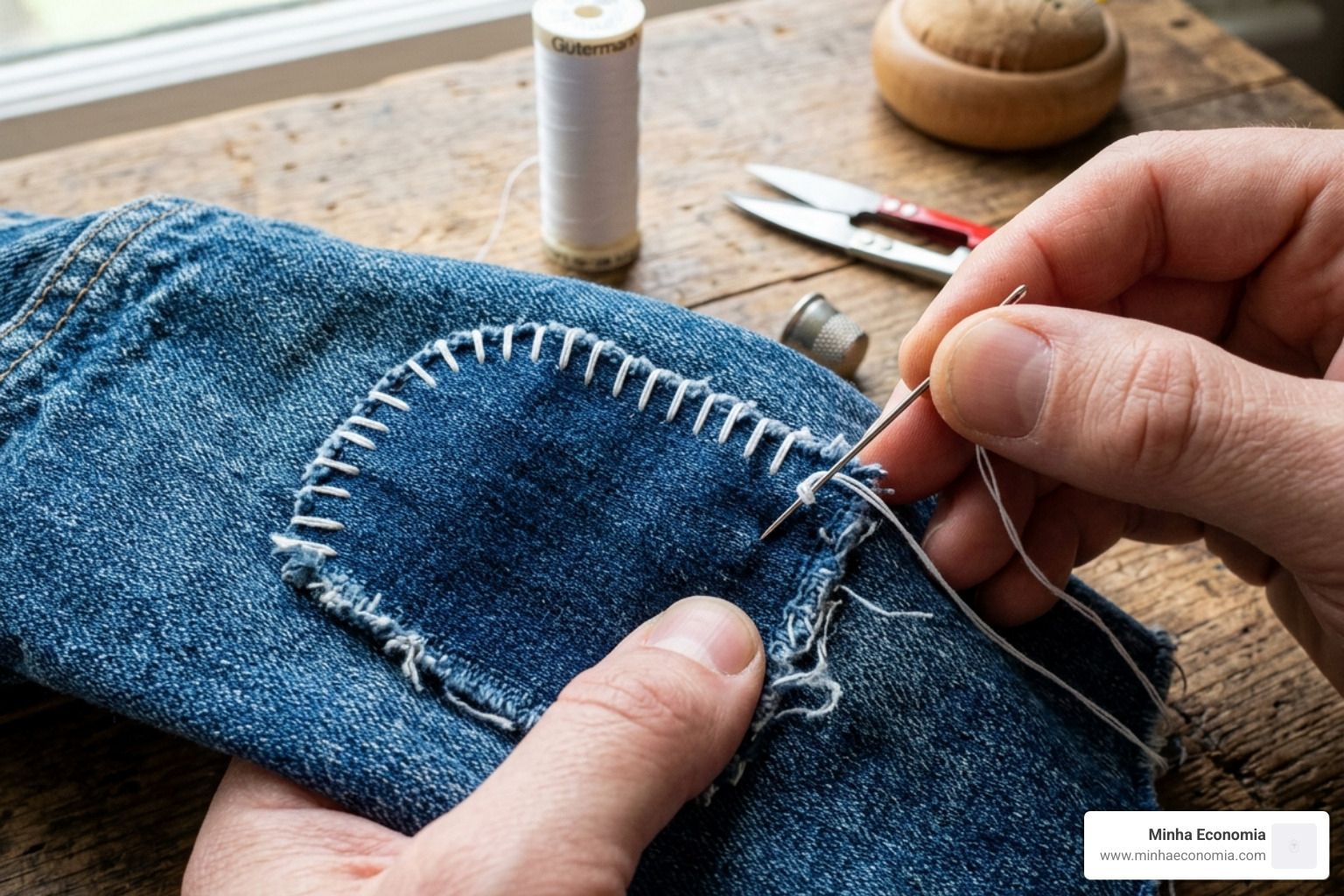
- Whip Stitch: This is the most common. You loop the thread over the edge of the patch and back into the denim. It creates a “wrapped” edge that prevents fraying.
- Blanket Stitch: This is decorative and very secure. It looks like a series of “L” shapes along the edge.
- Running Stitch: A simple up-and-down stitch. This is great for “Sashiko” style patching, where you sew multiple rows of stitches across the entire patch for a vintage look.
- Knotting and Finishing: Once you’ve gone all the way around, pull the needle to the inside of the jeans. Create a small loop with your thread, pass the needle through it twice, and pull tight to create a secure knot. Snip the thread, leaving about 1/4 inch of a “tail” so the knot doesn’t unwrap.
For more visual details on these stitches, check out How to sew a patch on Jeans (Stitches used & 6 mistakes to avoid).
Pro Tips for Sewing Patches on Denim in High-Wear Areas
Knees and seats are the “danger zones” for jeans. They experience constant stretching and friction. A standard stitch might not be enough here.
- The “Double Perimeter”: For knee patches, we recommend sewing two circles of stitches. One right at the edge of the patch, and another about 1/4 inch inside the first one. This acts as a backup in case the first line of thread wears through.
- Bar Tacks: At the corners of square patches, add 3 or 4 extra stitches in the exact same spot. These “bar tacks” reinforce the points most likely to lift.
- Inside vs. Outside: If you want a subtle repair, place the patch on the inside of the jeans and sew around the edges of the hole (this is called reverse applique). If you want to show off your style, put the patch on the outside!
- Reinforcement Stitching: If the fabric around the hole is feeling “thin” but hasn’t ripped yet, sew a few rows of running stitches over the thin area before applying the patch. This creates a stronger foundation.
A great example of this “over-engineering” for durability can be seen in this guide: How I Patched My Denim Jeans And Added an Embroidery Embellishment.
Machine Sewing and Material-Specific Considerations
If you have a sewing machine, the process is much faster, but it requires a bit of maneuvering.
Using the Free-Arm Most modern machines have a “free-arm” (the part of the machine that sticks out when you remove the accessory tray). Slide the leg of your jeans over the free-arm to sew patches on the lower leg without sewing the whole pant leg shut!
Machine Settings
- Stitch Length: Set your machine to 3.0–4.0 mm. Stitches that are too short and close together can actually act like a “perforation” line, making the denim easier to tear.
- Zig-Zag Stitch: A tight zig-zag stitch (often called an applique stitch) is the most durable way to secure a patch edge via machine.
Special Materials
- Leather Patches: If you are sewing a patch onto a leather section of a denim jacket, you must use a leather needle. Leather needles have a triangular point that cuts through the hide. Regular needles will just bounce off or bend.
- Denim Jackets & Linings: If your jacket has a lining, try to only sew through the outer denim layer. If you sew through the lining, the jacket might “pull” weirdly when you wear it.
- Letterman Jackets: These often have wool bodies. Use a whip stitch for the wool sections to allow for the natural “give” of the fabric.
For more on machine techniques, see How To Sew Patches On Jeans (DIY Patchwork Pants).
Common Mistakes and Long-Term Maintenance
Even with the best intentions, things can go wrong. Here are the most common pitfalls we see:
- Mismatched Fabric Weight: Using a stretchy spandex patch on 100% cotton denim. The patch will stretch, the denim won’t, and the stitches will pop.
- Ignoring the Stretch: If you are patching “skinny jeans” with high stretch, your patch needs to have a similar stretch, or you won’t be able to get your leg through the knee!
- Weak Knots: If your knot is too small, it will pull right through the denim. Always make your knots “chunky.”
- Not Using a Free-Arm: We’ve all done it—accidentally sewing the front of the jean leg to the back. Always double-check that you’re only sewing through one layer of denim!
How to Care for Patched Denim
- Wash Inside Out: This protects the threads of the patch from rubbing against other clothes in the wash.
- Cold Water Only: Heat can shrink different fabrics at different rates, leading to puckering.
- Air Dry: The high heat of a dryer is the number one killer of patch adhesives and delicate stitching.
- The 3-Month Check: Every few months, give your patches a little “tug.” If the edges are lifting, spend 5 minutes adding a few reinforcement stitches. This proactive care can extend the life of the repair by a year or more.
Frequently Asked Questions about Sewing Patches on Denim
How much does it cost to sew on a patch professionally vs. DIY?
In April 2026, professional tailors typically charge between $3 and $10 per patch. While that sounds small, if you have five patches to add to a jacket, you’re looking at $50. Doing it yourself costs roughly $0.50 (the cost of a bit of thread and a scrap of fabric). That’s a massive saving that adds up over time, especially if you’re mending for a whole family.
Can you sew through iron-on patches for extra security?
Yes! In fact, we highly recommend it. Iron-on adhesive is notorious for failing after a dozen washes. We suggest ironing the patch on first to “set” it, then sewing a straight stitch or whip stitch around the perimeter. This gives you the best of both worlds: the ease of placement from the glue and the permanent hold of the thread.
What is the best way to attach patches to leather sections of denim?
As mentioned, use a leather needle and heavy-duty polyester thread. Do not use pins on leather, as they leave permanent holes. Instead, use small binder clips or “wonder clips” to hold the patch in place. Sew slowly—leather is tough, and rushing can cause your machine to skip stitches.
Conclusion
At Minha Economia, we believe that self-sufficiency is the ultimate form of economic empowerment. Learning sewing patches on denim isn’t just about fashion; it’s about taking control of your resources. Every time you pick up a needle instead of a credit card to “replace” something broken, you are winning.
Mending is a rebellion against the throwaway culture of the past. By extending the life of your garments by 50+ washes, you reduce waste and keep your hard-earned money in your pocket. Whether you’re repairing a blowout or customizing a jacket to tell your unique story, these stitches are an investment in your wardrobe’s longevity.
Ready to take the next step in your self-sufficiency journey? Start your mending journey with Minha Economia and discover more ways to save, create, and thrive. Happy sewing!
