
Don’t Patch It Up with Trash: The Best Fabrics for Your Jacket
Why the Best Fabric for Jacket Patches Makes or Breaks Your Customization
The best fabric for jacket patches depends on your jacket type and how the patch will be attached — but for most people, twill is the top choice because it’s durable, embroidery-friendly, and holds up through repeated washing.
Here’s a quick-reference guide before we dive deeper:
| Fabric | Best For | Attachment Method |
|---|---|---|
| Twill | Embroidered patches, uniforms, professional use | Iron-on, sew-on |
| Canvas | Outdoor gear, military-style, heavy-duty use | Sew-on, iron-on |
| Denim | DIY projects, casual jackets, vintage looks | Iron-on, sew-on |
| Felt | Decorative patches, hats, bags | Sew-on |
| Cotton | Everyday jackets, T-shirts, light use | Iron-on, sew-on |
Patches are one of the cheapest ways to refresh a jacket you already own — or fix one that’s starting to wear. And in a world where the global jacket market tops $53 billion a year, there’s no shortage of outerwear worth personalizing.
But here’s the problem most people run into: the patch falls off after a few washes, or the fabric puckers, or the design looks muddy. Almost every time, the root cause is the same — the wrong fabric was used, either for the patch itself or on the jacket it was applied to.
As one patch industry expert puts it: “Even the most fantastic embroidery patch can lose appeal if it’s not on a suitable fabric.”
The fabric is the foundation. Get it wrong, and no amount of careful ironing or tight stitching will save you. Get it right, and a five-dollar patch can make a jacket look like it came from a boutique.
This guide walks you through exactly which fabrics work, which ones to avoid, and how to match your patch material to your specific jacket — so you don’t waste money or ruin something you care about.
The Best Fabric for Jacket Patches: Top 5 Contenders
When we talk about the best fabric for jacket patches, we aren’t just looking for something that looks pretty. We need a material that can handle the “life” of a jacket: the friction of a backpack strap, the heat of a dryer, and the occasional rainstorm.
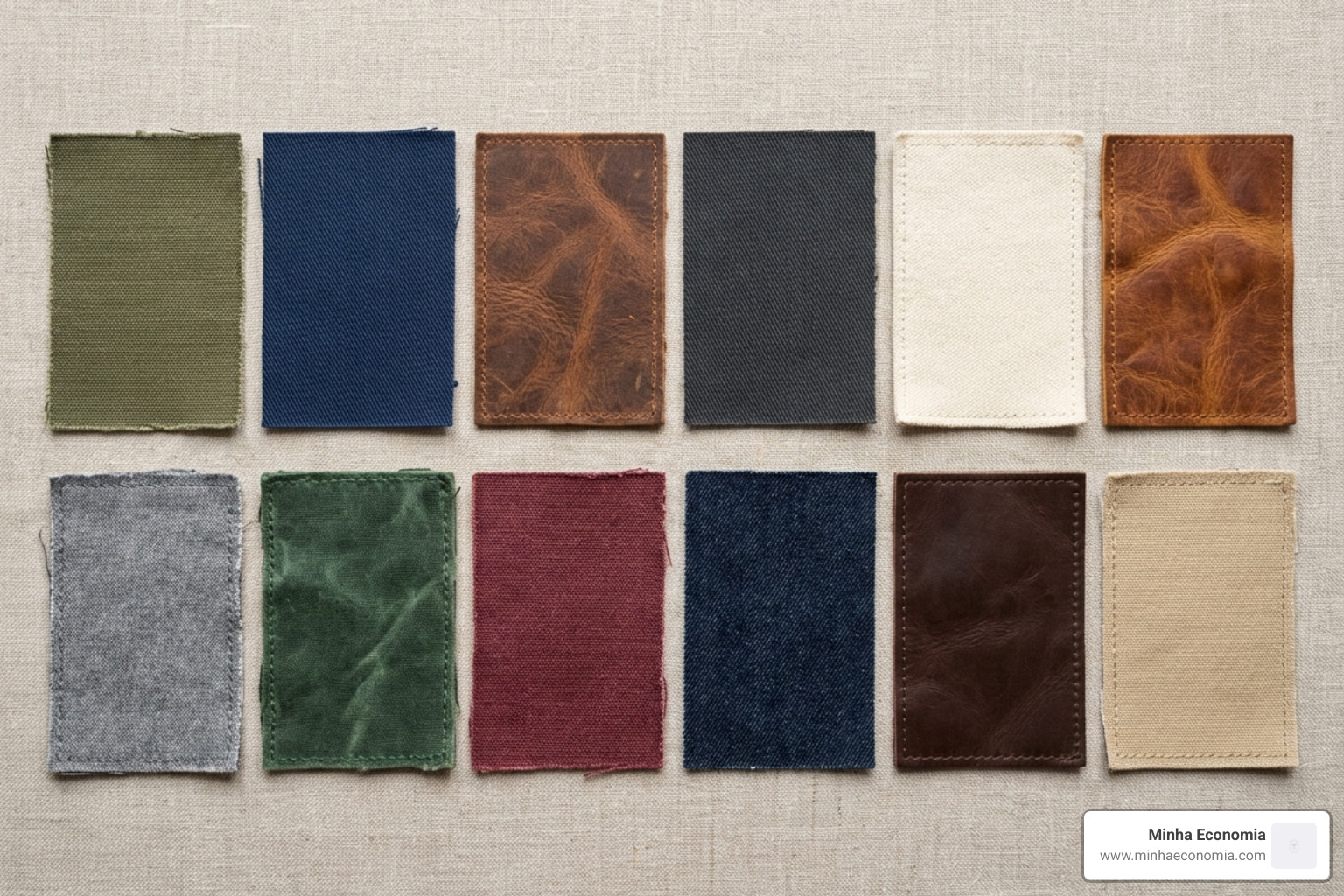
Choosing a high-quality material ensures your embellishment doesn’t just look good on day one but ages gracefully alongside your favorite outerwear. According to the Best Patch Materials for Durable, Stylish Embellishments guide, the goal is to balance aesthetics with performance.
Why Twill is the Best Fabric for Jacket Patches in Professional Settings
If you look at a professional uniform or a high-end brand’s logo patch, you’re almost certainly looking at cotton twill. Twill is characterized by its diagonal weave pattern (think of the lines on your favorite chinos).
Why do we love it for patches?
- Stability: It doesn’t stretch or warp easily when thousands of stitches are punched through it.
- Embroidery-friendly: The tight weave provides a smooth surface that allows for crisp, clean lines.
- Durability: It is incredibly resistant to fraying and can handle high-heat iron-on applications.
- Colorfastness: Twill holds onto dyes well, meaning your bright red patch won’t turn pink after three washes.
For corporate settings or team jackets, twill is the industry gold standard. It provides a professional, “raised” look that feels substantial without being overly bulky.
Selecting the Best Fabric for Jacket Patches on Outdoor Gear
For those of us who love our parkas, bombers, and field jackets, twill might be a bit too “polite.” This is where canvas enters the chat. Canvas is a plain-weave, heavy-duty fabric that is essentially the tank of the textile world.
If you are customizing a jacket for hiking, camping, or heavy labor, canvas is the best fabric for jacket patches. It’s resilient, weather-resistant, and can support larger, heavier designs without sagging. According to Best Custom Patches for Jackets: A Guide to Perfect Fit, canvas patches are often the go-to for military-style gear because they can survive rough conditions that would shred lighter fabrics.
Felt and Denim for DIY Projects
If you’re taking the self-sufficiency route and making your own patches at home, felt and denim are your best friends.
- Felt: The biggest “pro” of felt is that it doesn’t fray. You can cut it into any shape — a star, a skull, a lightning bolt — and you don’t have to worry about the edges falling apart. It has a soft, vintage appeal that works beautifully for hand-stitched projects. However, keep in mind that felt is usually a “sew-on only” material; most felt won’t survive the high heat required for iron-on adhesives.
- Denim: Using old scraps of jeans is the ultimate upcycling move. Denim is a cotton-rich blend that is sturdy and versatile. It looks fantastic on denim jackets (the “denim-on-denim” look is a classic for a reason) and handles both iron-on and sew-on methods with ease.
Matching Patch Material to Your Jacket Type
You wouldn’t put a heavy truck tire on a bicycle, right? The same logic applies here. The best fabric for jacket patches must be compatible with the weight and material of the jacket itself.
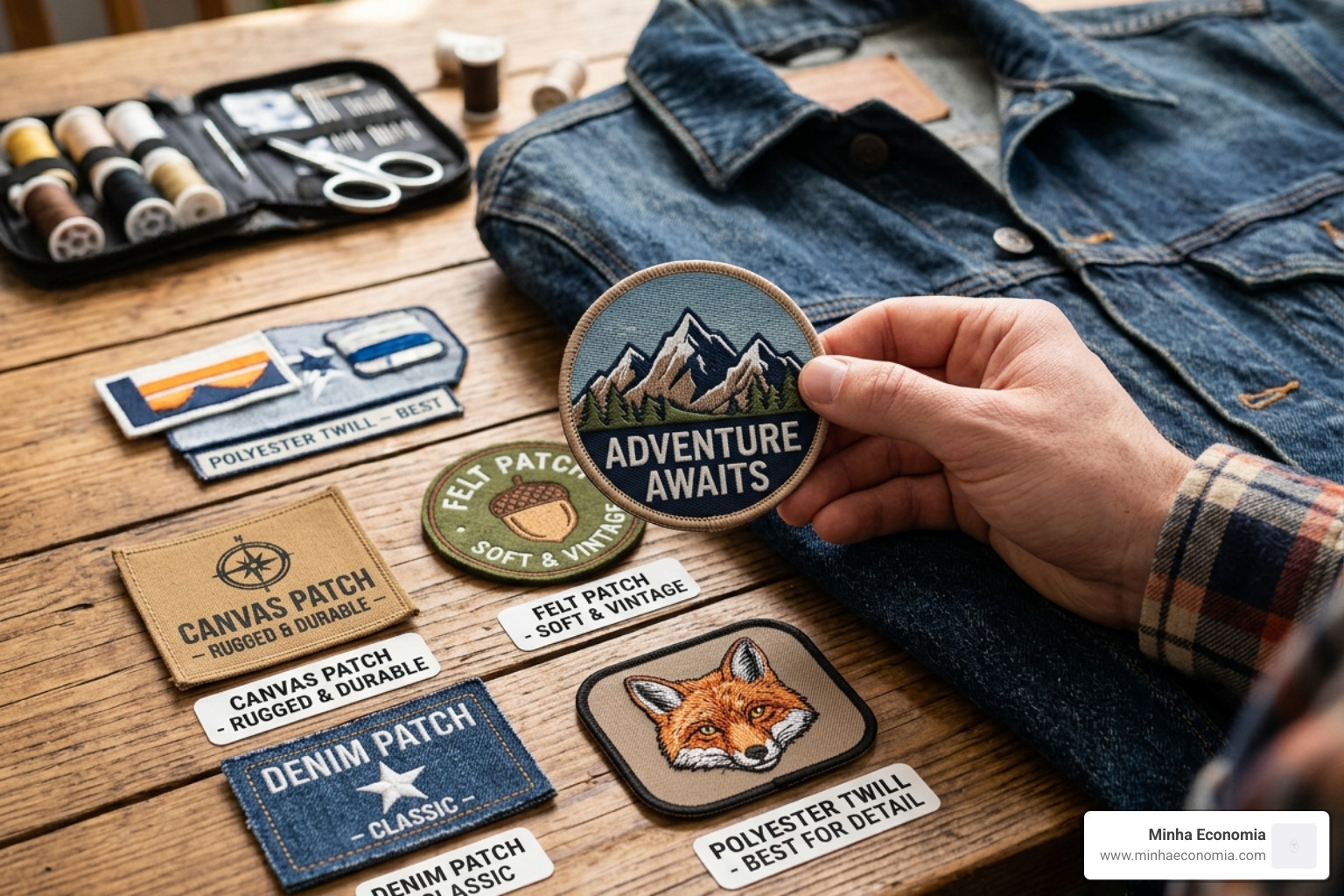
As noted in the Best Jacket For Patches (Types, Styling Tips & Placement Ideas) – CustomPatchFactory.Com guide, the texture, porosity, and heat sensitivity of your jacket are the three most important factors to consider.
Customizing Leather and Faux Leather
Leather is a different beast entirely. It is non-porous, meaning iron-on adhesives have nothing to “grab” onto. If you try to iron a patch onto leather, you’ll likely just ruin the leather with heat and end up with a patch that peels off in twenty minutes.
For leather customization, we recommend:
- Patch Material: Leather, PU leather, or heavy embroidered twill.
- Thickness: Aim for a patch thickness of 1.2-1.5mm. Anything thinner might tear; anything thicker is a nightmare to sew.
- Attachment: Use a leather-specific adhesive or, better yet, sew it on using a heavy-duty needle.
A great resource for this specific challenge is How to Customize Leather Jacket with Patches, which emphasizes that while adhesive is quicker, sewing provides the lasting resilience needed for a material as heavy as leather.
Handling Synthetics: Nylon and Polyester
Nylon and polyester (common in windbreakers and puffer jackets) have very low melting points. If your iron is set to a “cotton” setting, you will melt a hole right through your jacket.
When working with synthetics:
- Check the label: If it says “Do not iron,” listen to it!
- Use a pressing cloth: Always place a thin cotton cloth between the iron and the patch.
- Low heat: Use a lower temperature and press for shorter intervals.
- Consider glue: Sometimes, a high-quality fabric glue is safer than heat for these delicate materials.
Application Methods: Iron-On vs. Sew-On vs. Velcro
How you attach your patch is just as important as the fabric itself. Here is a breakdown of the most common methods used in April 2026.
| Method | Durability | Ease of Use | Best Fabric Choice |
|---|---|---|---|
| Iron-On | Medium | High | Twill, Denim, Cotton |
| Sew-On | Very High | Medium | All (Leather, Canvas, etc.) |
| Velcro | High | High | Tactical/PVC, Twill |
| Glue-On | Low/Medium | High | Synthetics, Leather |
As the Leather vs. Fabric Patches: Pros, Cons & Uses Explained article points out, the “best” method often depends on how often you plan to wash the garment and how much stress the patch will endure.
Best Practices for Iron-On Success
For a permanent bond, your household iron needs to be set between 270°F and 320°F.
- Heat the surface: Iron the area of the jacket where the patch will go first to warm up the fibers.
- Pressure is key: Don’t just sit the iron there; lean into it! You need firm pressure for 15-20 seconds.
- Let it cool: This is the mistake we see most often. People try to “test” the edges while the adhesive is still hot. Let it sit until it is completely cool to the touch before moving the jacket.
When to Choose Sew-On for Maximum Longevity
If you’re patching a high-wear area like an elbow or a shoulder, or if the jacket goes through a heavy-duty wash cycle every week, sewing is the only way to go.
Sew-on patches offer structural integrity that adhesives simply can’t match. Look for patches with a merrow border — that thick, wrapped edge you see on most patches. This border is designed to be a “sewing lane,” making it much easier to get a needle through without ruining the design.
Common Mistakes and Professional Testing Techniques
We’ve all been there: you spend an hour perfectly placing a patch, only to have it warp the fabric or start peeling after one day.
One of the biggest mistakes is trying to put a stiff patch on a stretchy fabric (like Spandex or Lycra). As the jacket stretches, the patch stays rigid, causing the fabric to pull, pucker, and eventually tear. Avoid stretchy fabrics for patches whenever possible.
The “Window Light” and Adhesion Test
How do you know if your fabric is a good candidate for a patch? We use two simple professional tests:
- The Window Light Test: Hold your jacket fabric up to a bright window. If you see large gaps in the weave or lots of light coming through, the fabric is likely too “loose” for a heavy embroidered patch. You’ll need a lighter, woven patch instead.
- The Scrap Test: If you’re worried about heat damage, always test your iron on a hidden part of the jacket (like the inside of a pocket or the bottom hem) using a scrap piece of fabric first.
Avoiding Heat Damage on Delicate Materials
Fabrics like acetate and silk are beautiful, but they are “patch-unfriendly.” They scorch easily and can’t support the weight of a heavy patch. For these materials, we always recommend a professional digitizing service or using a very fine needle and silk thread to hand-sew a lightweight woven patch. If you must use a patch, stick to “peel-and-stick” temporary adhesives for events rather than a permanent heat-set bond.
Frequently Asked Questions about Jacket Patches
Can I use iron-on patches on a leather jacket?
No. We strongly advise against this. Leather is highly sensitive to heat and can discolor, shrivel, or crack. Additionally, the smooth surface of leather doesn’t allow the adhesive to create a permanent bond. Instead, use a leather-safe fabric glue or sew the patch on using a “thimble” and a heavy-duty needle.
Which fabric is best for patches with fine, intricate details?
For high-resolution designs or small text, woven patches are superior to embroidered ones. While embroidered patches use thicker threads on a twill base, woven patches use much thinner threads woven together to create the entire design. This allows for incredible detail without the bulk. Sublimation (printed) patches are also an option for photo-realistic designs.
How do I ensure my patches don’t peel off after washing?
The “Golden Rule” for patched jackets is: Wash cold, hang dry. High heat in the dryer is the #1 killer of patch adhesives. It melts the glue all over again, causing the edges to lift. For extra security, we always recommend adding a few “anchor stitches” around the corners or the perimeter of an iron-on patch.
Conclusion
At Minha Economia, we believe that economic empowerment starts with the small things — like knowing how to maintain and personalize the items you already own. Mending a jacket with a high-quality patch isn’t just a fashion statement; it’s a practical skill that saves you money and reduces waste.
Choosing the best fabric for jacket patches is the difference between a “trashy” DIY job and a professional-grade piece of outerwear. Whether you’re opting for the classic stability of twill, the ruggedness of canvas, or the premium feel of leather, the foundation is everything.
Don’t let your hard work peel away. Take the time to match your materials, test your heat settings, and when in doubt, grab a needle and thread. Start your mending journey today and turn your old wardrobe into something uniquely yours!
