
Patch It Up: Your Guide to Invisible Jacket Repairs
Why Knowing How to Mend Jacket with Patches Saves You Money and Your Favourite Gear
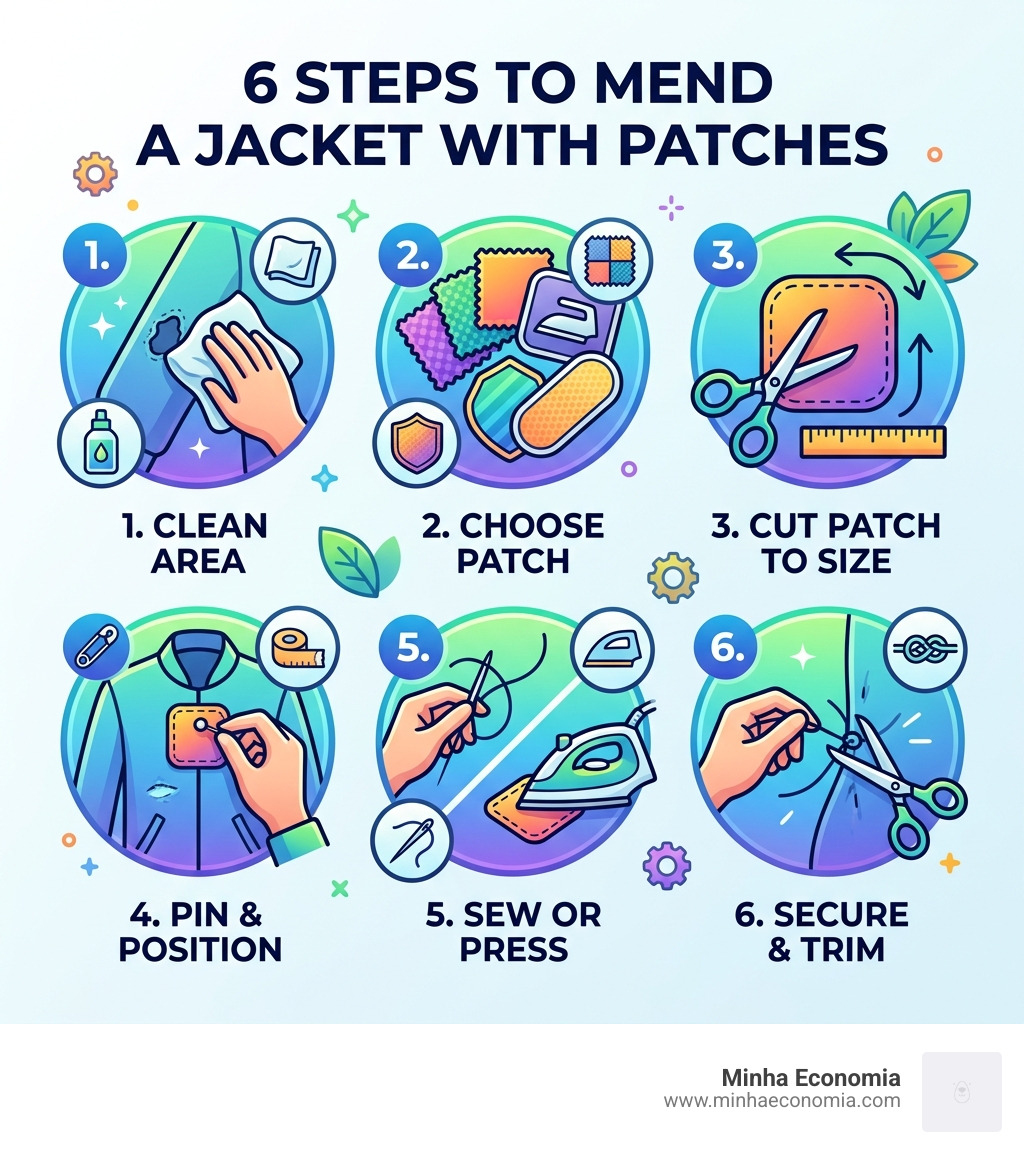
How to mend jacket with patches is simpler than most people think — and it can save you real money. Here’s a quick overview of the process:
- Clean the damaged area with a damp cloth or rubbing alcohol
- Choose the right patch for your jacket fabric (fabric, iron-on, or adhesive)
- Cut the patch so it overlaps the damage by at least 1 inch on all sides, with rounded corners
- Pin or tape the patch in place to test positioning before committing
- Sew or press the patch using a method suited to your jacket type
- Secure the thread with a knot on the inside and trim any excess
A jacket with a hole doesn’t have to mean a trip to the shops. Whether it’s a down puffer ripped on a hiking trail, a beloved denim jacket with a fraying elbow, or a work coat with a worn-out sleeve — a well-placed patch can fix it fast.
And the savings add up. Replacing a quality jacket in April 2026 can easily cost $100–$300 or more. A patch kit? A few dollars at most.
Beyond the money, there’s something satisfying about repairing something with your own hands. Every stitch adds a bit of history to a garment — a visible record of a life well lived, not just discarded when things get tough.
This guide walks you through everything: the right tools, the right stitches, and the right approach for different jacket types — so your repair looks intentional, not accidental.
Essential Tools and Materials for Mending
Before we dive into the “how-to,” we need to gather our gear. Think of this as your mending “first aid kit.” Having the right tools on hand prevents that mid-project frustration when a needle snaps or the thread won’t cooperate with thick denim.
At Minha Economia, we believe that self-sufficiency starts with a well-stocked toolkit. For most jacket repairs, you will need:
- Heavy-duty needles: If you’re working with denim, canvas, or leather, a standard embroidery needle won’t cut it. Look for “denim needles” (size 90/14) or specialized leather needles that can pierce thick layers without bending.
- Polyester or Nylon thread: These are much stronger than 100% cotton thread. They resist fraying and can handle the tension of a moving arm or a heavy breeze.
- Fabric scissors: Sharpness is key. Dull scissors will chew up your patch edges, making them harder to sew.
- Thimble: Don’t skip this! Pushing a needle through three layers of heavy fabric is a recipe for a sore finger.
- Pins and Clips: Pins work for most fabrics, but for leather or waterproof materials where you don’t want to leave permanent holes, fabric clips are a lifesaver.
- Tailor’s chalk or a fabric pencil: This helps you mark your placement so you don’t end up with a crooked patch that haunts your dreams.
According to experts at How to Sew a Patch on a Jacket (By Hand or Machine) – Craft Gossip, using the correct needle and thread combination is the difference between a repair that lasts years and one that fails after the first wash.
Thread Selection for Different Jacket Types
| Jacket Material | Recommended Thread | Needle Type |
|---|---|---|
| Denim / Canvas | Heavy-duty Polyester | 90/14 Sharp |
| Down Puffer / Nylon | Fine Polyester or Silk | Microtex / Fine Sharp |
| Leather | Bonded Nylon | Leather (chisel point) |
| Wool | Wool yarn or Polyester | Large Eye / Chenille |

Choosing the Right Patch for Different Fabrics
Not all patches are created equal. If you put a heavy embroidered patch on a delicate silk-lined jacket, the weight will eventually cause the fabric to tear further. Conversely, a thin adhesive strip won’t hold up against the friction of a denim elbow.
Choosing the right material is the first step in mastering how mend jacket with patches. As we explore in our Mastering the Art of Patchwork: A Step-by-Step Guide on How to Sew Patches on a Jacket, the goal is to match the weight and “give” of the patch to the jacket itself.
For more resources on selecting sustainable materials for your home projects, visit Minha Economia.
Matching Materials to Jacket Type
- Down Puffer: These require “ripstop” nylon patches or specialized gear tape like Tenacious Tape. Because these jackets are often water-resistant, you want a patch that won’t absorb moisture.
- Denim: This is the most versatile. You can use iron-on denim patches, contrasting cotton fabrics (like flannel or bandana print), or even leather.
- Leather: Never use an iron on leather! You’ll need either a sew-on leather patch or a specialized leather-safe adhesive.
- Wool: Traditional felt patches or even “needle felting” can work wonders here. Hand-sewing is usually best to avoid distorting the natural weave of the wool.
- Canvas: Think workwear. These jackets need heavy-duty canvas patches and thick thread to match their rugged nature.
Visible vs. Invisible Mending
In April 2026, the trend of “Visible Mending” is stronger than ever. Instead of trying to hide the repair, you celebrate it.
- Japanese Boro: This technique uses multiple layers of scrap fabric and simple running stitches (sashiko) to create a beautiful, textured repair. It’s perfect for denim.
- Invisible Mending: This uses a “ladder stitch” or matching thread to make the patch disappear. This is ideal for formal wool coats or professional attire where you want the jacket to look brand new.
- Character Building: Every patch tells a story. That rip from a campfire spark or a thorny bush becomes a badge of honor rather than a flaw.

Step-by-Step: How Mend Jacket with Patches by Hand
Hand-sewing gives you the most control, especially in awkward spots like underarms or near zippers. It might take a little longer than a machine, but the results are often more durable because you can feel the tension of every stitch.
According to the How to Put Patches on a Jacket: Step-by-Step Guide, preparation is 90% of the work.
Preparing the Surface: How Mend Jacket with Patches Like a Pro
- Wash and Dry: Never patch a dirty jacket. Dirt and oils can prevent adhesives from sticking and make sewing difficult. Plus, if the jacket shrinks in the wash after you’ve sewn a patch, it will pucker.
- Trim the Fray: Use your sharp scissors to snip away loose threads from the hole. This prevents the “hairy” look under your patch.
- The Cardboard Trick: Slide a piece of cardboard inside the sleeve or body of the jacket. This ensures you don’t accidentally sew the front of the jacket to the back!
- Symmetry Check: If you’re adding decorative patches to the chest or shoulders, use a ruler to ensure they are even.
- The Phone Photo: Before you start sewing, take a photo of the pinned patch. Sometimes we get too close to the project and don’t realize it’s 1cm off-center until it’s finished. A photo gives you a fresh perspective.
Choosing Stitches: How Mend Jacket with Patches for Longevity
- Running Stitch: The simplest stitch. Just up and down through the fabric. Great for the “Boro” look.
- Whip Stitch: You “wrap” the thread over the edge of the patch. This is excellent for preventing the edges of the patch from fraying.
- Blanket Stitch: A decorative version of the whip stitch that looks like a series of “L” shapes. It’s very strong and looks professional.
- Backstitching: This is the strongest hand stitch. It mimics a machine stitch and is perfect for high-stress areas like elbows.
- Knotting: Always start and end your thread on the inside of the jacket. Double-knot your thread at the end to ensure it doesn’t pull through over time.
Machine Sewing and No-Sew Alternatives
If you’re short on time or have a massive tear to fix, a sewing machine can be your best friend. However, machines can be tricky with bulky jackets.
For more tips on choosing the right tools for your DIY journey, check out our guides at Minha Economia.
When to Use a Machine
- Zigzag Stitch: This is the gold standard for patches. A narrow zigzag stitch that straddles the edge of the patch will lock it down permanently.
- Teflon Presser Foot: If you are sewing onto a “sticky” surface like vinyl or treated leather, a Teflon foot helps the machine glide without bunching the fabric.
- Pivot Technique: When you reach a corner, leave the needle down in the fabric, lift the presser foot, rotate the jacket, and then lower the foot to continue. This keeps your corners sharp.
When to Use No-Sew Adhesives
Sometimes, sewing isn’t an option. Maybe the fabric is too tough, or you’re in the middle of a camping trip.
- Tenacious Tape: This is a miracle for down jackets. It’s flexible, waterproof, and doesn’t require heat.
- Fabric Fusion / Glue: Great for decorative patches on jackets that won’t be washed constantly.
- Curing Time: This is the mistake most people make. Most fabric glues and tapes need 48 hours to fully “cure” before they are truly permanent. Don’t wear the jacket immediately!
Special Considerations for Puffer and Lined Jackets
Repairing a down jacket is like performing surgery. If you aren’t careful, you’ll end up in a cloud of feathers.
- The Hemostat Trick: If feathers are poking out, use a pair of hemostats (or a blunt pencil) to gently push them back into the “baffle” (the quilted section).
- Seal the Leak: Before patching, you can use a tiny dab of fabric glue or even a wet finger to temporarily seal the hole so no more down escapes while you work.
- Shell-Only Stitching: If your jacket has a lining, try to only sew through the outer “shell.” This keeps the inside looking clean and prevents the lining from bunching up. Use a “sleeve board” to help separate the layers.
Caring for Your Patched Jacket
You’ve done the hard work; now you need to make it last. A patched jacket requires a little more love than a brand-new one.
- Wash Inside Out: This protects the edges of the patch from rubbing against the agitator or other clothes.
- Cold Water Only: Heat is the enemy of many patch adhesives. Cold water prevents the glue from softening and keeps the patch from shrinking.
- Mild Detergent: Harsh chemicals can break down the fibers of your repair thread.
- Air Dry: Never put a patched jacket in a high-heat dryer. The heat can melt iron-on glue or cause different fabrics to shrink at different rates, leading to puckering. Hang it up or lay it flat.
- Seasonal Inspection: Once a year, give your patches a little tug. If an edge is lifting, a quick “insurance stitch” can fix it before it becomes a bigger problem.
Frequently Asked Questions about Jacket Patching
Can I use iron-on patches on a leather jacket?
Absolutely not. The heat required to activate the glue on an iron-on patch will permanently damage, discolor, or even melt leather and synthetic “pleather.” For leather, always use a specialized leather glue or sew it on using a dedicated leather needle and bonded nylon thread.
How do I stop feathers from escaping a puffer jacket while patching?
The “pinch and pull” method is best. Reach from the inside of the jacket (if possible) and pull the feathers back in. If you can’t reach them, use a blunt object to poke them back. A quick trick from the experts at Rab is to wet your fingers; the moisture helps seal the tiny hole in the fabric long enough for you to apply your patch.
Is sewing better than ironing for patch durability?
While iron-on patches are convenient, the glue is not permanent. Over time, through heat, moisture, and movement, the glue will eventually fail. For the most durable repair, we recommend combining both methods: iron the patch on to hold it in place, then sew around the edges with a whip stitch or zigzag stitch for maximum security.
Conclusion
Learning how mend jacket with patches is more than just a craft; it’s a step toward a more sustainable and economically empowered lifestyle. By choosing to repair rather than replace, you keep money in your pocket and high-quality garments out of landfills.
Whether you opt for the artistic flair of visible mending or the sleek finish of an invisible repair, your jacket is now uniquely yours. It carries the marks of your adventures and the care of your own hands.
At Minha Economia, we are dedicated to providing you with the practical tools you need for everyday economic empowerment. From mending your favorite gear to mastering your personal finances, we believe that small, intentional actions lead to big changes.
Ready to tackle your next project? Start your mending journey today and discover how easy it is to live a more self-sufficient life. Happy mending!
